Archive for the 'Genetics' category

Array-CGH: Discovering the miracles of the embryo

IFRAME Embed for Youtube

New technologies are making remarkable progress in the diagnosis of fertility. The latest development that has been incorporated into the range of diagnostic techniques is called array-CGH.

This new genetic test allows us to analyze our cells’ DNA to limits that years ago we would have considered pure science fiction.

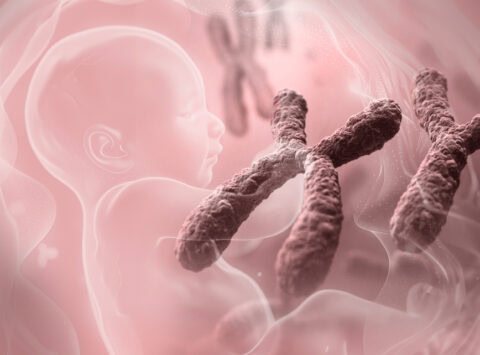
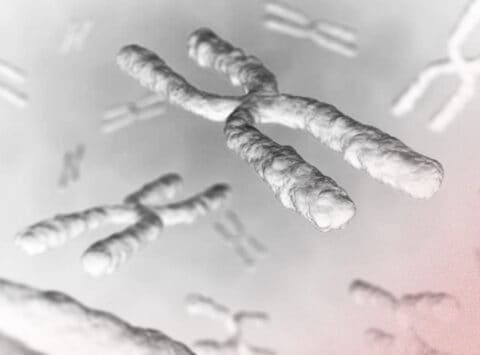
The human genome is made up of 46 chromosomes: 23 from the father and 23 from the mother. All of our organism’s genetic information is stored in these chromosomes. The excess or defect of any chromosome region may be responsible for certain diseases or fertility problems, such as implantation failure or recurrent miscarriages.

Until now, the possibility of analyzing our genome was very limited. There were essentially two most commonly used techniques:

  • FISH: the use of fluorescent probes allows us to analyze the presence or absence of a single chromosomal region.
  • And the karyotype, which reveals the number and structure of the chromosomes.

The Array-CGH is much more sensitive and efficient than the conventional karyotype and allows us to reach diagnostic levels that are 10 times higher than the karyotype.

For example, we could say that the karyotype is the “general map” of our chromosomes in which we can only see the highest mountains and the largest rivers, whereas the Array-CGH would act like a zoom that would greatly expand the resolution of our map so that the smaller mountains and rivers and would become visible.  This means that the chromosomal analysis through Array-CGH allows us to detect chromosomal abnormalities that would be imperceptible in the karyotype.

The Array-CGH technique analyzes the complete genome of an individual looking for gains or losses of genetic material. In other words, the Array-CGH allows us to identify duplications or absences of small chromosomal regions that the karyotype is not able to detect.

With an Array-CGH analysis, the DNA problem is marked in fluorescent green. In parallel, a DNA control (without any chromosomal abnormality) is marked in red.Jose-y-array-1024x621

The mixture of the two fluorescent labels is hybridized against a DNA “chip”. This chip or array contains a collection of molecules of DNA that sweep the entire human genome.

The result of hybridization is analyzed by a scanner. When the DNA content is normal, the scanner detects the colour yellow, which is combination of red and green. But if a certain chromosomal region is in excess or defect, the scanner will detect the colour green or red respectively.

There are several applications to this technique:

To select the embryos that did not implant or caused a miscarriage in an IVF cycle due to alterations in the chromosomes.

To identify possible chromosomal alterations in foetuses in which anomalies were detected by ultrasound.

Nowadays, the Array-CGH is a highly promising diagnostic and therapeutic tool, since it allows us to identify chromosomal alterations that could not be detected by other techniques. It therefore offers a solution to many couples that come to our clinic in their search for a healthy baby of their own.

Dr. José A. Ortiz, biochemist of Instituto Bernabeu

To see the upcoming topics in our forum, follow us on facebook or twitter.

For your convenience, here you can arrange an online consultation or book an appointment at Instituto Bernabeu.

For further information, consult our website: www.institutobernabeu.com/en/

No responses yet

Chromosomal alterations in repeated miscarriages

Imagen9-e1297356992948Couples who get pregnant, either naturally or through assisted reproductive techniques, are especially worried about the successful outcome of the pregnancy.

Unfortunately, some pregnancies end in miscarriage or fetal loss in the week 20 of pregnancy, when the fetus is not able to survive outside of the maternal uterus. Continue Reading »

No responses yet

Becoming a mother after 40

Nowadays, we all know that maternity is being postponed, currently standing at 31 years of age, according to the National Statistics Institute.

This basically means that the average woman has her first child at the age of 31. Continue Reading »

No responses yet

Indications of Preimplantation Genetic Diagnosis (PGD)

Preimplantation Genetic Diagnosis (PGD) is a new technique used in Reproductive Medicine and is one of the main sources of innovation and research. PGD allows embryos to be selected from assisted reproduction cycles and tested for certain genetic or chromosomal abnormalitybefore being transferred to the womb.

IFRAME Embed for Youtube

Continue Reading »

No responses yet

Egg donation explained simply

IFRAME Embed for Youtube

For 21 years, egg donation has been a treatment that Instituto Bernabeu offers to women who need it, which has made it a European reference point for egg donation.

It is the reproductive technique with the highest pregnancy rates, over 60% per cycle. At IB, the overall pregnancy rate after three cycles of treatment is over 90%. Continue Reading »

No responses yet

Intentionally delaying motherhood: oocyte vitrification

IFRAME Embed for Youtube

Although egg cryopreservation was introduced more than 20 years ago, the results so far have been dispiriting, but in recent times there have been remarkable advances and improvements in the field of cryobiology which have made its acceptance as a routine technique possible.

Continue Reading »

No responses yet

IB Low Ovarian Response Unit

IFRAME Embed for Youtube

A patient with low response to the ovarian stimulation for IVF is probably the most significant challenge faced by professionals treating couples with fertility problems

Continue Reading »

No responses yet

IB implantation failure and repeated miscarriage unit

IFRAME Embed for Youtube

At Instituto Bernabeu, we have developed a specific programme with protocols designed to treat repeated miscarriages and unsuccessful assisted reproduction treatments through the multidisciplinary approach that allows us to diagnose and therefore overcome these problems.

Continue Reading »

No responses yet

Antioxidant-rich diet and improved male fertility

Around 8 million people around the world have infertility problems. Delayed conception affects about 15% of all couples trying to get pregnant. However, slight/moderate male factors that produce sub-fertility in couples are estimated to represent about 50% of all cases. Tremellen confirms that 1 in 20 men will be sub-fertile (Tremellen, 2008).

Continue Reading »

No responses yet

Cystic Fibrosis and fertility

IFRAME Embed for Youtube

Cystic fibrosis is a chronic and progressive disease that appears in early childhood and affects many organs in the body, (such as the lungs, intestines, pancreas, liver…). The disease causes thick mucus production, which leads to blockages and infections.

Continue Reading »

No responses yet