Sclerotherapy in Endometriosis: a minimally invasive and safe technique
Endometriosis is a complex disease that can significantly affect the quality of life and fertility of many women. In recent years, less invasive alternatives to traditional surgery have emerged, such as endometrioma sclerotherapy, a safe and effective technique that we are beginning to apply in clinical practice with very promising results.
What is sclerotherapy?
Sclerotherapy, in general terms, is a minimally invasive medical procedure that consists of puncturing a cyst to empty its contents and introducing a sclerosing substance —usually ethanol— to destroy the tissue lining it.
In the gynaecological context, it can be used to treat endometriomas (ovarian cysts), avoiding in many cases the need for surgery for endometriosis. Unlike conventional surgery, it does not require incisions, is performed on an outpatient basis and allows for a faster recovery.
What does sclerotherapy for endometriosis involve?
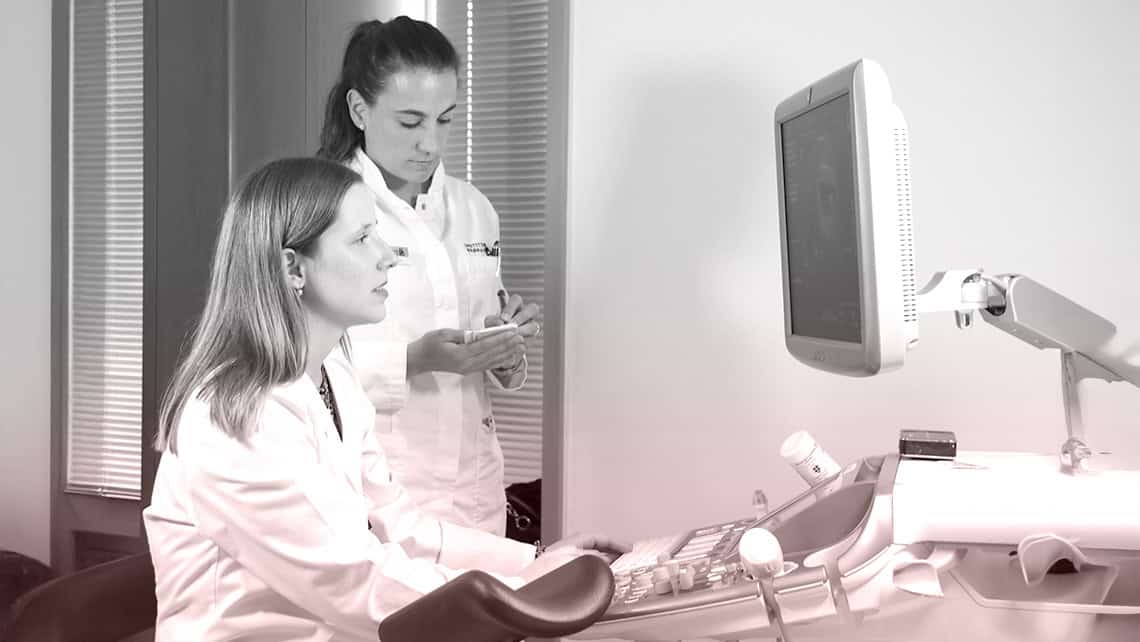
Sclerotherapy of an endometrioma is performed under vaginal ultrasound guidance. The entire procedure usually lasts approximately 30–45 minutes and is carried out under mild sedation, minimising patient discomfort.
The procedure includes the following steps:
- Puncture of the endometriotic cyst
- Aspiration of the contents (the typical chocolate-like fluid found in endometriomas)
- Washing of the cyst cavity with saline solution
- Introduction of ethanol to destroy the endometrial tissue inside
- Reaspiration of the ethanol
This technique makes it possible to treat endometrial tissue without significantly damaging the ovary, which is essential in patients wishing to preserve their fertility.
Benefits of sclerotherapy vs surgery in endometriosis
Traditionally, the treatment of endometriomas has been surgical, through laparoscopy. However, surgery is not without risks, especially in terms of ovarian reserve.
Sclerotherapy offers several important advantages:
- Minimally invasive: no surgical incisions required
- Preservation of ovarian reserve
- Rapid recovery
- Reduction of pelvic pain in many cases
- Lower risk of post-surgical adhesions
- Outpatient procedure
Although it does not replace surgery in all cases (for example, patients with deep endometriosis who have a clear surgical indication), it is an excellent alternative in selected patients. It may be especially recommended in:
- Patients with reproductive desire
- Women with low ovarian reserve
- Endometriomas that hinder ovarian stimulation or follicular puncture
- Recurrence after previous surgery
- Cases in which avoiding surgery is desired
The indication must always be individualised, taking into account factors such as cyst size, symptoms, the patient’s age and reproductive plans.
Instituto Bernabeu, pioneers in the application of sclerotherapy in endometriosis
At our Instituto Bernabeu Endometriosis Unit, we have recently performed one of the first cases of sclerotherapy applied to endometriomas, within a comprehensive approach to endometriosis treatment. This advancement represents an important step towards more conservative, safer treatments adapted to the needs of each patient.
Our goal is to offer alternatives that not only treat the disease, but also protect fertility and improve quality of life. The incorporation of techniques such as sclerotherapy reinforces this commitment.
Dr Silvia Gorgan, gynaecologist at Instituto Bernabeu Alicante.