
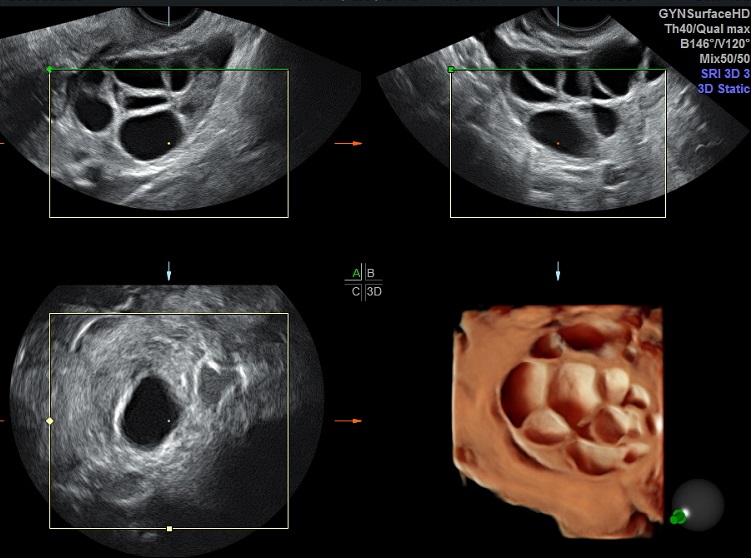
Growth hormone (GH) treatment for low ovarian
What is the Low Ovarian Response?
Controlled ovarian stimulation is a key part in the in vitro fecundation treatment, as the eggs number retrieved is directly related to the possibility of achieving pregnancy. Despite the continuous advances in the assisted reproduction techniques, the low response to the ovarian stimulation still a challenge in the everyday clinical practice for all of us who work in the reproductive medicine.
We could call it low ovarian response if the patient meets at least two of the following points:
- 40 years old or older or any disease affecting ovaries background, such as endometriosis, surgery or chemotherapy or radiotherapy treatments
- Previous ovarian stimulation with retrieval of 3 or less eggs
- Any altered ovarian reserved marker (Antimullerian hormone or Antral Follicles Count)
Two previous ovarian stimulations with few eggs retrieved would also be considered as as low responder without the need of other factors. Recurrent low ovarian response implies negative economic and emotional impact in couples.
What is the Growth Hormone?
The growth hormone (GH) is secreted in natural conditions by the hypophysis and its function is to activate growth and cell proliferation.
Its administration is done daily by subcutaneous injection, and treatment is maintained whilst the ovarian stimulation continues.
One of this therapy’s main inconvenience is the cost.
Does the growth hormone use whilst ovarian stimulation increases the live child possibilities in patients with low ovarian response?
Some studies describe the growth hormone possibility to modulate the action of the hormone that stimulates the ovarian follicles growth (FSH), increasing its response and so increasing the number of follicles and eggs retrieved. In fact, it’s been used for years to try increasing the ovarian stimulation response in low responders’ patients, in spite of the low evidence presented.
However, this data has not been proved in recently published studies, just as an increase in pregnancy nor new-borns is not proven either. The growth hormone value whilst ovarian stimulation is still today very uncertain.
Instituto Bernabeu recommended use
At Instituto Bernabeu we always follow the latest scientific evidence to recommend or advise against a treatment for our patients. Regarding the use of growth hormone, the available scientific literature is limited and controversial, and does not allow a clearly demonstrated clinical benefit to be established. Furthermore, in Spain its use in this context has not been specifically approved and its use is restricted to the hospital setting. For all these reasons, and with the aim of guaranteeing our patients treatments supported by sufficient evidence of efficacy and safety in the medium and long term, this treatment is not currently part of our standard therapeutic protocols
IT MAY ALSO BE OF INTEREST TO YOU
- Poor Ovarian Response Unit
- Endometriosis Unit
- What is the Ovarian Reserve? How important is it for fertility?
Dra Cristina García-Ajofrín, gynaecologist of Instituto Bernabeu