
The impact of fires on fertility
- Exposure to industrial gases and petroleum-derived particles can compromise reproductive health in the short and long term.
- Experts at Instituto Bernabeu point out that the endocrine disruptors present in smoke alter hormonal balance and semen quality.
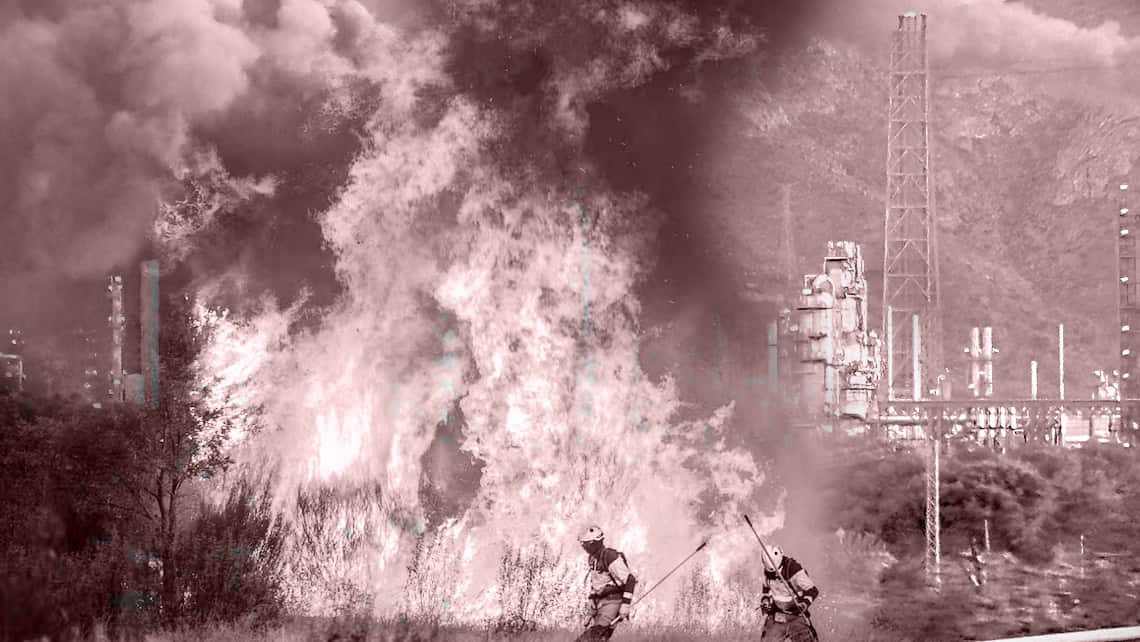
Following the fire at the distillation unit in Valle de Escombreras (Cartagena, Murcia), public concern has shifted from the visible column of smoke to the silent consequences on the body; medical specialists are focusing on a particularly vulnerable area: reproductive health.
Dr Carlos Alvarado, medical coordinator at Instituto Bernabeu Cartagena, explains that industrial accidents involving petroleum derivatives release substances that go beyond simple respiratory irritation. According to the expert, these components can directly interfere with the biological processes necessary for conception.
The impact on male and female health
The toxic cloud generated by chemical combustion fills the environment with fine particles (PM2.5 and PM10), benzene and nitrogen oxides. These elements act in different ways depending on the patient’s profile:
- In men: Oxidative stress occurs in testicular tissue. This leads to a drop in sperm concentration and reduced motility. In addition, Alvarado highlights the risk of increased sperm DNA fragmentation, which makes it difficult for pregnancy to reach full term.
- In women: Certain compounds act as endocrine disruptors. By ‘mimicking’ natural hormones, they can block them and cause irregularities in the menstrual cycle or ovulation problems. In cases of greater exposure, it is even linked to a reduction in ovarian reserve.
Risks during pregnancy
The danger does not end with conception. Gases derived from oil combustion can compromise foetal development by hindering the delivery of oxygen and essential nutrients through the placenta. This situation, warns the doctor, increases the chances of premature births or miscarriages, especially in cases with pre-existing vulnerabilities.
The importance of prevention
Although not all exposed individuals will suffer from these pathologies, Dr Alvarado insists that the severity depends on the intensity and duration of contact with the toxic cloud. The recommendations of the health authorities are essential to minimise this impact in the future.
The Instituto Bernabeu reminds us that reproductive capacity acts as a barometer of our environmental health. Therefore, after episodes such as the one in Escombreras, it is vital to carry out medical monitoring that considers not only immediate conditions, but also damage that, although not visible today, could manifest itself in the coming months.
Dr Carlos Alvarado. Medical coordinator at Instituto Bernabeu Cartagena.