Advanced sperm selection techniques to improve reproductive outcomes
Sperm selection can improve the chances of achieving pregnancy.
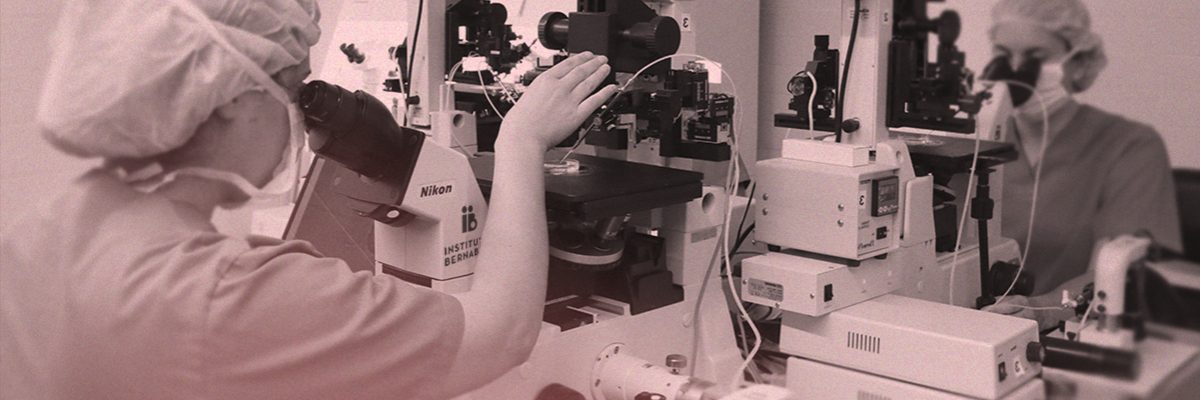
In recent years, new sperm selection techniques have emerged to obtain sperm with better characteristics prior to performing ICSI. The aim of all of them is to achieve gametes with improved motility, morphology and DNA integrity—factors that can directly influence fertilisation and embryo development.
Below, we outline the main available options and their current status according to scientific evidence.

DNA integrity
(sperm DNA fragmentation)

Spermatozoon maturity

Spermatozoon ultra-morphology
Advanced morphological assessment (IMSI)
IMSI uses very high magnification (around 6000x) to select sperm with better morphology.
However, current studies and international recommendations indicate that it does not improve clinical outcomes, and therefore its routine use is not recommended.
Physiological ICSI (PICSI / Sperm Slow)
Hyaluronic acid is used either on the microinjection dish (PICSI) or in the culture medium (“Sperm Slow”) to select mature sperm, which are theoretically associated with fewer chromosomal abnormalities.
Although conceptually interesting, studies have not demonstrated a clear benefit, and it is therefore considered a complementary method.
MACS: Apoptosis-based selection
The use of annexin columns such as MACS prior to ICSI allows the selection of pre-apoptotic sperm or those with damaged membranes, which would otherwise undergo programmed cell death and would not lead to viable embryos.
However, its effectiveness is variable and does not always guarantee improved outcomes.
Microfluidic devices
Microfluidic sperm selection systems allow the selection of sperm with better motility and DNA integrity.
They are particularly useful in cases of moderate or high DNA fragmentation, although their benefit depends on the type of sample and further prospective studies are still needed to determine their performance.
Granulosa cell-based selection device patented by Instituto Bernabeu
Instituto Bernabeu has developed a sperm selection device that uses the patient’s own granulosa cells as a natural biological filter within a microfluidic system.
This barrier reproduces, in a controlled way, part of the physiological selection process that occurs in the female reproductive tract.
Preliminary results, from experimental studies and early clinical trials, show:
- A very significant reduction in sperm DNA fragmentation, observed in laboratory studies and initial validation data
- Improved sperm motility and capacitation, promoted by interaction with granulosa cells and reflected in increased functional capacitation markers
- Better embryo quality, with a higher proportion of good-quality blastocysts in early clinical results obtained in ICSI
- Particularly relevant benefits in patients of advanced maternal and paternal age, with improved blastulation rates and blastocyst quality in these groups
- No need to centrifuge the sample, reducing manipulation and potential oxidative stress damage, and allowing selection, capacitation and ICSI to be performed within a single device
This tool is currently under study, with full results pending publication. In addition, a specific analysis of the fertilising capacity of the selected sperm is being carried out to ensure that the procedure is safe, reproducible and fully validated before routine clinical use.
Sperm selection is a continuously evolving field. Some techniques are used as complementary tools, while others—such as the new granulosa cell-based device developed by Instituto Bernabeu—show very promising results, although definitive validation is still required. The medical team will determine the most appropriate technique for each case, always based on the most up-to-date scientific evidence.