Revolution in identifying the most competent sperm: the innovative patented dish by Instituto Bernabeu that improves treatment success by up to 10%
In assisted reproduction treatment, every detail counts. And although for years the main focus was on the egg and embryonic development, today we know that sperm quality plays a decisive role in the reproductive success of our patients.
Sperm selection is not merely a technical laboratory procedure: it is a critical biological decision that can influence fertilisation, embryo quality and implantation potential.
Índice
From natural selection to sperm microinjection
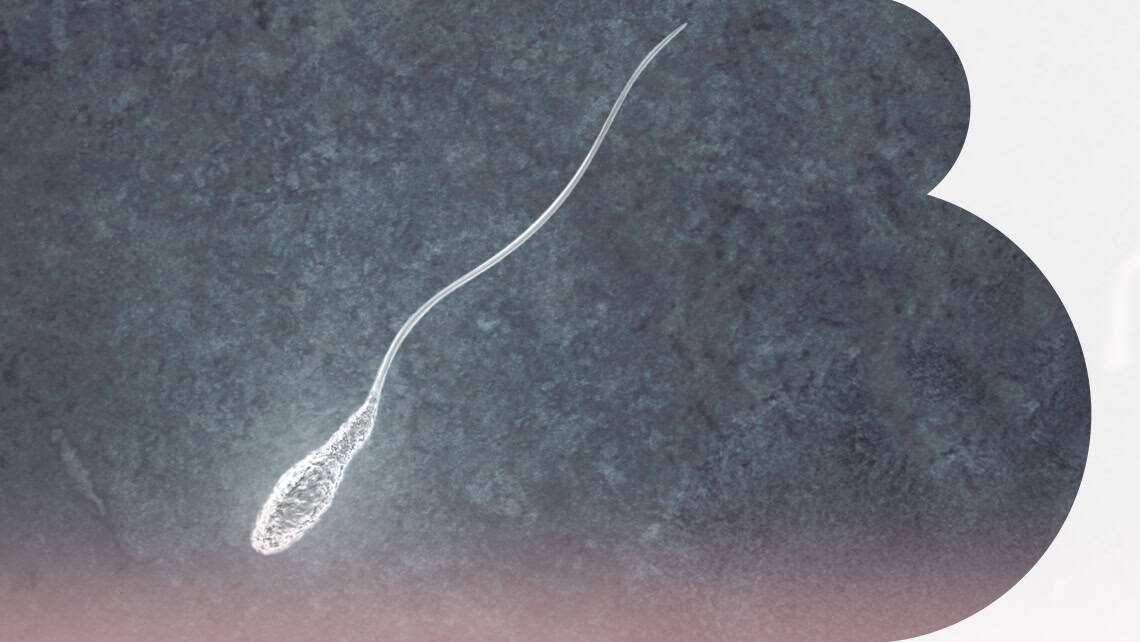
In natural conception, millions of sperm begin a complex journey until only one manages to fertilise the egg. This process acts as a sophisticated filter of nature, involving factors such as motility, morphology, DNA integrity and functional capacity.
The arrival of ICSI in the 1990s was a real revolution, allowing severe cases of male factor infertility to be treated. However, this advance transferred to the embryology laboratory a responsibility previously reserved for biology: choosing the most competent sperm.
Since then, the real challenge has not only been to fertilise, but to select better.
Beyond what is visible under the microscope
For years, selection criteria were based mainly on visible parameters such as motility and morphology. However, research has shown that these criteria do not always reflect actual genetic integrity.
Sperm DNA fragmentation, oxidative stress, or invisible structural alterations can compromise embryonic development even when the sperm appears to be normal.
This knowledge has prompted a new era in reproductive medicine: reproducing the natural mechanisms of biological selection in the laboratory.
New sperm selection plate: A breakthrough led by Instituto Bernabeu
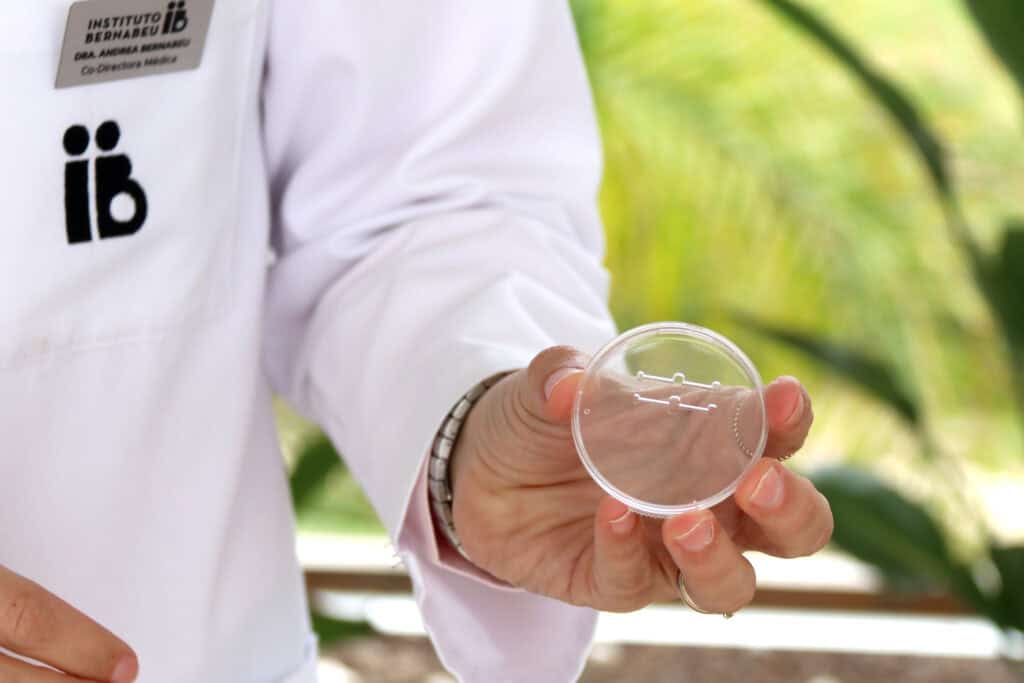
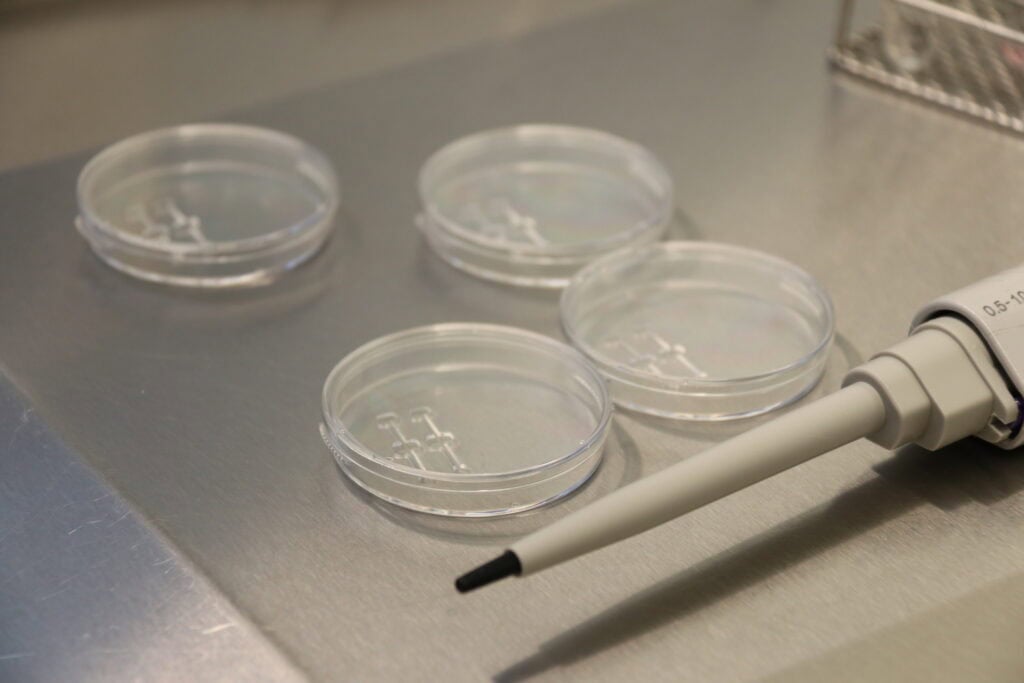
In this scientific evolution, Instituto Bernabeu has taken a decisive step forward. After six years of in-house research and technological development, the centre’s research team has created a sperm plate that is unique in the world and more closely replicates the natural selection process that occurs in the female body.
This achievement is not the incorporation of external technology, but rather the direct result of the R&D&I model developed by Instituto Bernabeu over more than four decades, integrating laboratory, clinical research and in-house technological development to tailor each treatment to our patients.
The plate incorporates microchannels and a cellular environment that simulates physiological interaction with the cells surrounding the egg. Only sperm with the highest functional quality and lowest genetic damage pass through this biological barrier before being used in in vitro fertilisation.
The results obtained are clinically significant:
- Up to a 10% improvement in reproductive success rates after IVF.
- A 75% reduction in sperm DNA damage.
- Increased yield of viable embryos with implantation potential.
These findings have been scientifically endorsed at recent conferences of the European Society of Human Reproduction and Embryology (ESHRE), the Spanish Fertility Society (SEF) and the Association for the Study of Reproductive Biology (ASEBIR), where it received the innovation award. It has recently been published in the Journal of Assisted Reproduction and Genetics and in the official journal of the Association for the Study of Reproductive Biology (ASEBIR), confirming the impact of this innovation on clinical outcomes.
Improved outcomes in complex IVF cases and older patients
One of the areas where this development is most relevant is in patients seeking to become parents at an advanced maternal or paternal age, where gamete quality may be compromised.
The technology developed by Instituto Bernabeu allows sperm with lower DNA fragmentation and greater biological competence to be selected, improving embryo development even in eggs from women over 40 and offering new opportunities in particularly complex cases.
Innovation and patented safety with international reach
This breakthrough consolidates Instituto Bernabeu as one of the international leaders in innovation applied to fertility. With more than 40 years of experience, over 400 scientific publications and patients from 167 countries, the Spanish group with clinics in Alicante, Madrid, Palma de Mallorca, Cartagena, Benidorm, Elche, Albacete and Venice (Italy), founded by Dr Rafael Bernabeu, has built a unique model in which research is not complementary, but structural.
This new technology for selecting the most competent sperm is protected by a European patent and CE marked. It will begin its international expansion in 2026, bringing an innovation developed entirely in the Instituto Bernabeu laboratories to clinics around the world.
Because for us, the important thing is not to do more treatments, but to do them better.