
New Genetic Evidence on Pregnancy Loss:
Genetic Variants and Aneuploidyicas: new keys to understanding pregnancy loss
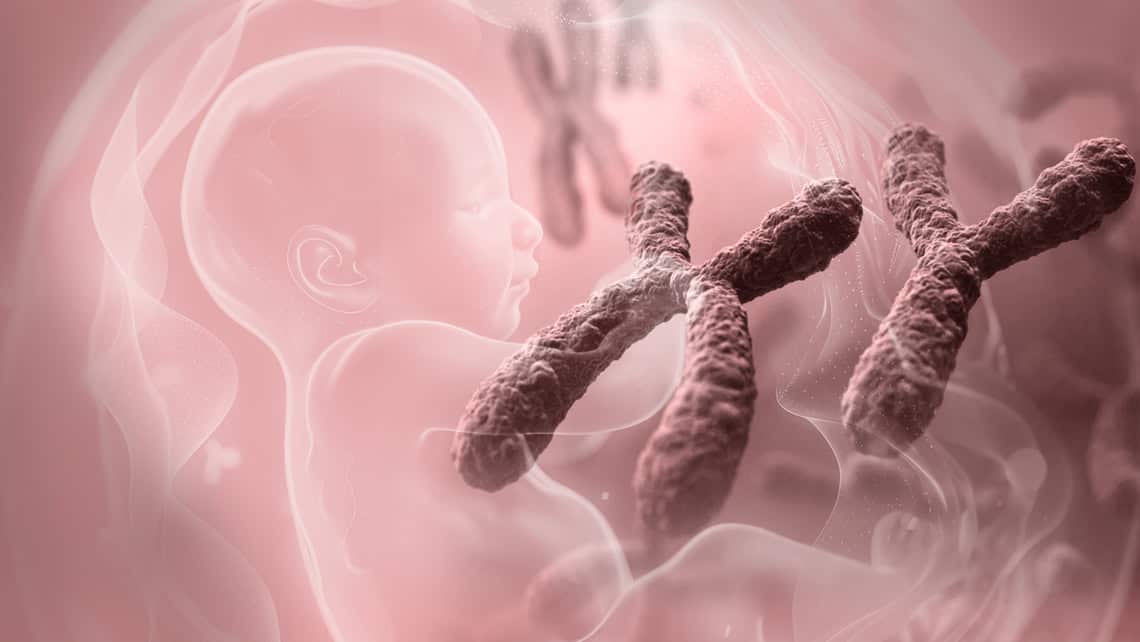
Aneuploidy—the presence of an incorrect number of chromosomes in embryos—is the leading cause of pregnancy loss and genetic disorders such as Down syndrome. Although its impact is vast, the genetic underpinnings that predispose individuals to these errors are poorly understood. A recent study published in the journal Nature, conducted by a team led by Rajiv McCoy1 (Johns Hopkins University), has made a decisive breakthrough in this field through the genetic analysis of more than 139,000 embryos obtained via in vitro fertilization.
There is clear evidence regarding the influence of maternal age as a limiting factor in female fertility, associated with low ovarian reserve, a high rate of embryonic chromosomal abnormalities, and miscarriages. However, we also encounter cases where young women exhibit high rates of miscarriage and chromosomal alterations.
The researchers demonstrated that aneuploid embryos present fewer chromosomal crossovers during meiosis, a key process for ensuring the correct separation of chromosomes.
The most relevant finding of the study was the identification of genetic variants, especially in the SMC1B gene, associated with lower meiotic recombination and, therefore, a higher risk of aneuploidy. These variants appear to weaken the cohesion between chromosomes during meiosis, promoting incorrect segregation and erroneous chromosomal distribution. This results in embryos with chromosomal abnormalities that frequently lead to miscarriages. Additionally, variants in other genes such as C14orf39, CCNB1IP1, and RNF212 were identified, highlighting that the risk of aneuploidy is determined by multiple genetic factors. In summary, these findings suggest that certain genetic variants may predispose individuals to embryonic aneuploidy, acting as an independent factor complementary to maternal age.
Taken together, this study does not allow for the prediction of individual risk; furthermore, it does not analyze rare or structural variants, nor environmental factors. Therefore, it does not have an immediate clinical application, but it represents a fundamental advance by identifying the key genetic mechanisms that influence aneuploidy. Moreover, these results reinforce the concept that there may be an individual susceptibility to aneuploidy beyond maternal age. It thus provides a solid foundation for future research on infertility and pregnancy loss, helping to explain why a biological process as essential as human reproduction is also so vulnerable to errors.
At Instituto Bernabeu, we have a long research history in studying genetic variants associated with reproductive issues, including recurrent miscarriage and implantation failure. In various publications, we have shown how genetic variants can be associated with an increased risk of recurrent miscarriage, implantation failure, or aneuploidy2. In addition to the analysis of genetic variants, we have recently completed a study focused on structural genetic alterations in patients with recurrent miscarriage and implantation failure, with promising preliminary results. Collectively, these works contribute to improving diagnosis and moving toward a more precise and personalized clinical approach for these patients.
Thus, both the recently published study and the ongoing research conducted at Instituto Bernabeu expand our knowledge of how genetics contributes to the complexity of the human reproductive process and strengthen the path toward more effective diagnostic and therapeutic strategies tailored to each patient.
Bibliography:
- Carioscia SA, Biddanda A, Starostik MR, Tang X, Hoffmann ER, Demko ZP, McCoy RC. Common variation in meiosis genes shapes human recombination and aneuploidy. Nature. 2026 Jan 21. doi: 10.1038/s41586-025-09964-2.
- Lledó B, Marco A, Morales R, Ortiz JA, García-Hernández E, Lozano FM, Cascales A, Guerrero J, Bernabeu A, Bernabeu R. Identification of novel candidate genes associated with meiotic aneuploidy in human embryos by whole-exome sequencing. J Assist Reprod Genet. 2023 Jul;40(7):1755-1763. doi: 10.1007/s10815-023-02825-9.
Dr. Belén Lledó, Director of IBBIOTECH, from Instituto Bernabeu group